Understanding PM2.5 and Its Impact on Health
Learn about the invisible threat of PM2.5 particles and how they affect your respiratory system.
In this article
Understand first
Three things this evidence means for you
- 1PM2.5 is small enough to penetrate deep into the lungs and can enter the bloodstream.
- 2Short- and long-term exposure can affect respiratory and cardiovascular health.
- 3Checking current conditions and reducing strenuous outdoor activity during peaks can lower exposure.
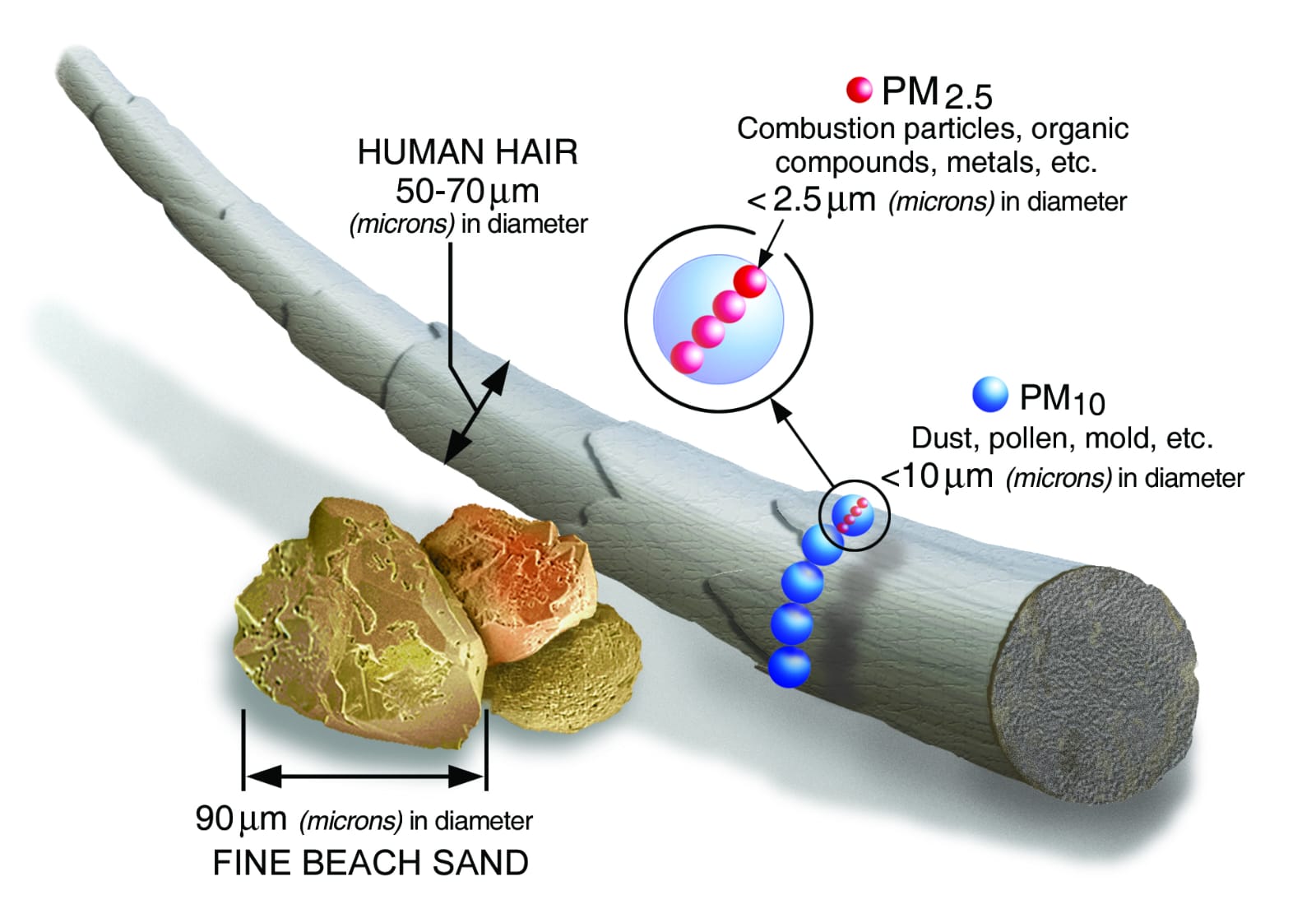
PM2.5 refers to airborne particles smaller than 2.5 micrometers, about 3% of the width of a human hair. Their tiny size allows them to travel deep into the lungs and sometimes enter the bloodstream.
Where PM2.5 comes from
Major sources include vehicle exhaust, industries, power plants, residential wood burning, forest fires, agricultural burning, and other combustion processes.
How it affects health
- Aggravated asthma and airway irritation
- Reduced lung function and difficulty breathing
- Irregular heartbeat and cardiovascular stress
- Higher risk for people with heart or lung disease
Who needs extra care
- Children whose lungs are still developing
- Older adults
- People with existing heart or lung conditions
- People exercising or working outdoors
Reduce your exposure
- Check local air quality before outdoor activity
- Use a HEPA air purifier indoors
- Wear a well-fitted N95 or KN95 during polluted periods
- Avoid exercise near heavy traffic
- Keep windows closed during pollution peaks
Local context
A Kathmandu Valley example
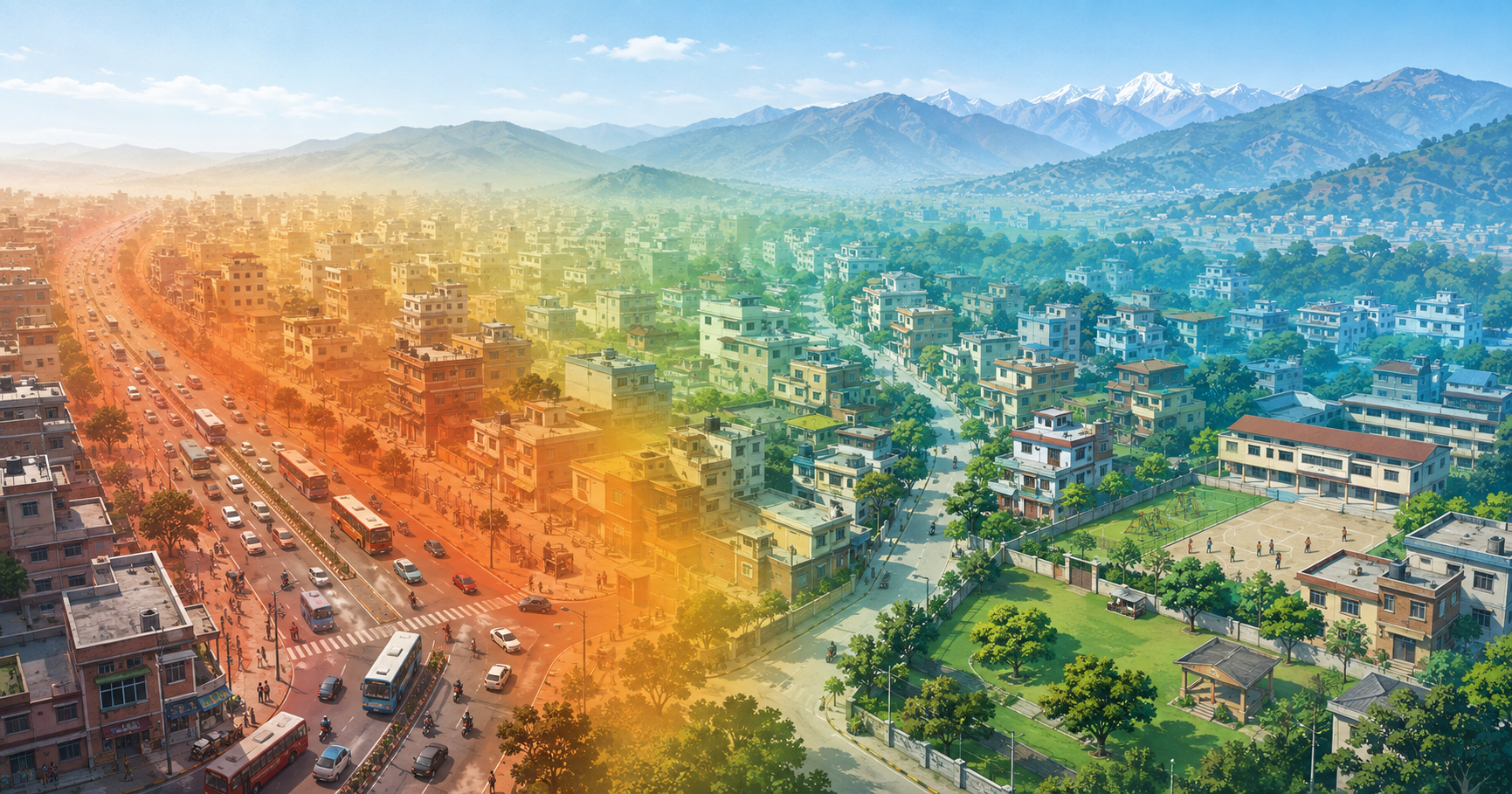
Kathmandu Valley can experience rapid changes in fine-particle concentrations as traffic, combustion sources, wind, and the valley's terrain interact. A city-wide reading is useful for context, but conditions beside a busy road can differ from those in a quieter residential area.
Now act
Practical recommendations
- Check the current AQI and PM2.5 value before exercise, school travel, or long outdoor work.
- Move strenuous activity away from busy roads and reschedule it when pollution is lower.
- During severe episodes, close obvious air leaks and use correctly sized filtration where practical.
- People with symptoms or existing heart or lung conditions should follow advice from a qualified clinician.
Sources and methodology
Health statements are summarized from WHO guidance. VayuDrishti displays modeled air-quality conditions by location; a city value should not be treated as a measurement at every street or indoor environment.
- 1.Types of air pollutants and health impacts: World Health Organization
- 2.WHO global air quality guidelines: World Health Organization
Continue learning
Related action guides
 Air Quality 101
Why Air Quality Changes from Street to Street in Kathmandu
A single citywide AQI can hide important differences between busy roads, residential lanes and open spaces. Discover what creates Kathmandu’s hyperlocal pollution hotspots.
Air Quality 101PM2.5 vs PM10: What Is the Difference?
Compare PM2.5 and PM10 by size, source, health impact and measurement, with practical steps to reduce particle exposure.
 Air Quality 101
What AQI Is Safe for Walking, Running and Outdoor Exercise?
Use AQI, activity intensity, health status, location and timing to decide when to walk, run, cycle or move exercise indoors.